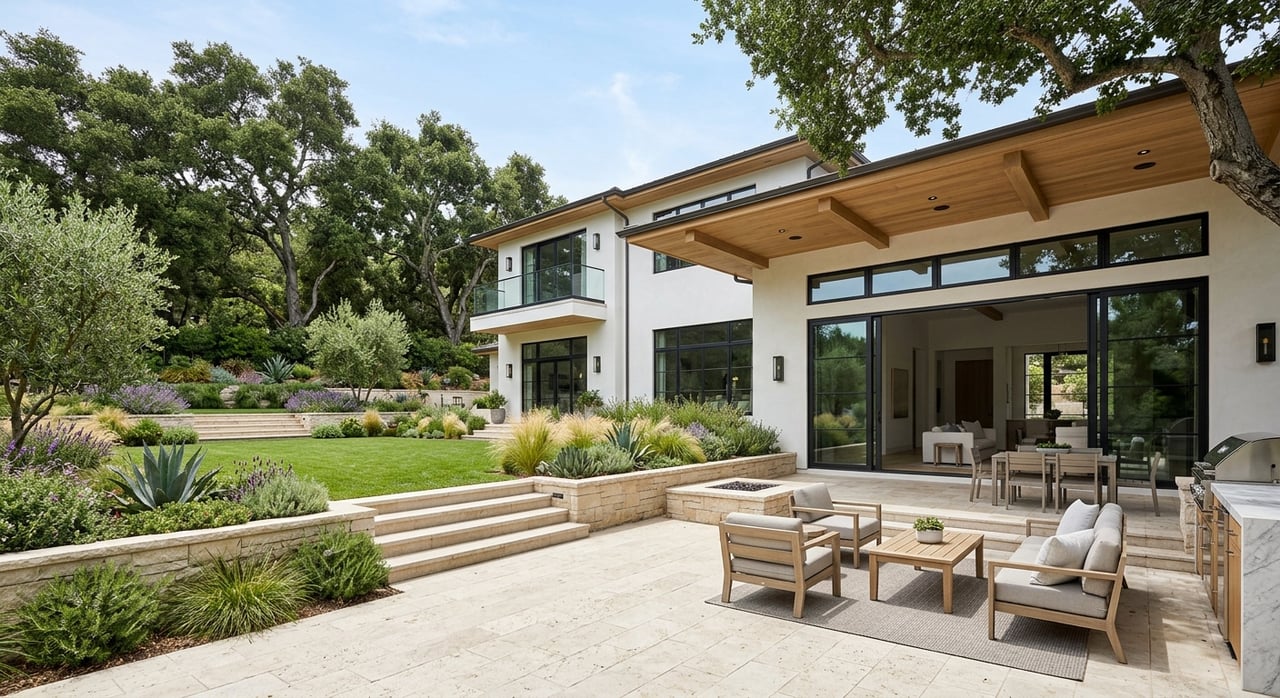
Wondering why two Los Altos Hills properties with similar acreage can have very different value? In this market, the answer is often the land itself, not just the house sitting on it. If you are buying, selling, or planning long term, understanding how lot value and estate potential work can help you make smarter decisions. Let’s dive in.
Why land matters so much here
Los Altos Hills is designed to stay low-density and semirural. The town describes itself as a residential-agricultural community with a little over 8,000 residents, rolling hills, open land, and a rural atmosphere. That setting is a major reason land carries so much weight in property value.
The pricing context supports that. In March 2026, Redfin reported a median sale price of $5,083,750 with 15 median days on market, while Realtor.com reported a median listing price of about $6.70 million and 30 homes for sale. In a market like this, buyers are often evaluating not only the existing residence but also the site’s long-term potential.
The Town of Los Altos Hills has also noted that land values are influenced by the semirural environment, hillside terrain, dense vegetation, and proximity to Silicon Valley. A historical planning estimate in the town’s housing element placed an acre of undeveloped land with reasonable development potential in the $1.5 million to $2.5 million range. That is not a current valuation, but it helps explain why lot characteristics can drive pricing so strongly.
Gross acreage vs usable land
Why size on paper can mislead
One of the biggest mistakes buyers and sellers make is focusing only on gross acreage. In Los Altos Hills, a parcel may look large on paper but still offer less usable space than expected once access easements, rights-of-way, slope, and site constraints are factored in. That is why net area often matters more than gross lot size.
The town’s worksheet defines net area as gross area minus vehicle access easements or rights-of-way. It then uses net area and slope to help calculate maximum development area and maximum floor area. In practical terms, that means two one-acre parcels can offer very different estate potential.
What usable land affects
Usable land shapes what you can realistically do with a property. It influences where a home can sit, how outdoor areas can be arranged, and whether the site can comfortably support amenities over time. If the lot has a clean building envelope and fewer constraints, it usually feels more flexible and more valuable.
On relatively flat one-acre lots, the town says maximum development area is typically 15,000 square feet and maximum floor area is typically 6,000 square feet. Development area includes buildings, parking areas, patios, decks, walkways, pools, tennis courts, and similar hardscape. Because development area is capped at 34% of lot size, the true value of a parcel depends heavily on how much of the site is actually practical to use.
How slope changes estate potential
Flatter lots usually offer more flexibility
Slope is not just a design issue in Los Altos Hills. It is directly tied to what can be built. The town’s planning framework uses average slope and net area to determine maximum floor area and maximum development area, so steeper lots generally face tighter limits than flatter ones.
For you as a buyer or seller, that matters because flatter and more efficient parcels usually preserve more estate capacity. They can make it easier to place the house, garage, pool, terraces, and open-air living areas in a way that feels intentional. Steeper parcels may still be beautiful, but the site often requires more careful planning.
Shape and orientation matter too
A lot’s value is not only about slope percentage. The shape of the parcel, how access works, and how the site lays out for privacy and outdoor enjoyment all affect how coherent the property feels. In this market, buyers often respond strongly to a parcel that feels easy to understand and easy to live on.
The town also requires a landscape plan for almost all projects to help mitigate off-site visual impacts. That reinforces an important reality in Los Altos Hills: the best estate properties are not just large. They are well-composed sites where the residence, outdoor spaces, screening, and circulation work together.
Outdoor amenities count toward value
More land does not always mean more freedom
Luxury buyers often want amenities such as a pool, tennis court, expansive patios, motor court, or guest accommodations. In Los Altos Hills, those features can absolutely add appeal, but they also count toward development area. That means lot planning has to balance lifestyle goals with site rules.
This is one reason a flatter, better-shaped parcel can outperform a larger but more constrained one. If outdoor amenities fit naturally within the site’s allowed development area, the property may present stronger estate potential. If not, the lot can feel more limited than its acreage suggests.
Common site features that count
The town includes the following in development area calculations:
- Buildings
- Parking areas
- Patios
- Decks
- Walkways
- Swimming pools
- Tennis courts
- Similar hardscape features
For sellers, this is important when positioning a property. Buyers are not only asking how big the lot is. They are asking how much of that lot can support the lifestyle they want.
Privacy and views are part of the value equation
In Los Altos Hills, privacy is not just a preference. It is part of how the town reviews development. Policies for secondary dwellings and accessory structures address visual prominence, acoustic privacy, neighbor impacts, and preservation of scenic views from contiguous lots.
That matters in the resale conversation because privacy and view protection support the estate feel many buyers are looking for. A property that creates separation, screening, and a strong sense of retreat will often stand out more than one with awkward siting or visually intrusive improvements.
This does not mean only the largest parcels win. Often, the most attractive sites are the ones where the home and outdoor spaces are positioned in a way that feels calm, protected, and visually balanced. In other words, coherence matters.
Baseline zoning supports estate-style living
One-acre minimum shapes the market
The town’s housing element says the R-A zoning district is centered on dwellings and agriculture, with a minimum lot size of one acre. That baseline supports the spacious character Los Altos Hills is known for. It also helps explain why buyers here focus so much on site quality.
The same guidance notes that building height is generally 27 feet, with a possible increase to 32 feet if setbacks are increased. Structures must also sit 40 feet back from the street and 30 feet from side and rear property lines. These standards encourage lower-profile, spread-out estate design rather than dense site coverage.
Amenities can be part of the plan
Accessory uses in the R-A zone can include pools, tennis courts, greenhouses, workshops, and secondary dwelling units. That gives many parcels meaningful flexibility, but the key question is whether the lot can absorb those elements while still working within setback, height, and development-area limits.
For buyers, this is where lot analysis becomes critical. For sellers, it is where strong property positioning can make a real difference. The best story is rarely just, “This lot is large.” It is, “This lot supports a clear and valuable estate vision.”
ADUs and future flexibility
Extra living space may be possible
Los Altos Hills offers owners more than one path to added functionality. The town says one ADU and one JADU are allowed on eligible residential lots, with ministerial review for applications that meet the objective standards. Detached ADUs are one story and 16 feet tall unless incentives apply.
That can create useful long-term options for guest space, multigenerational living, or a more flexible property layout. The exact fit depends on the parcel, zoning, setbacks, access, and other site standards. Still, for many owners, this flexibility adds to the property’s appeal.
SB 9 can add another layer
The town also says qualifying single-family lots in the R-A zone may support up to two dwelling units without discretionary review under SB 9, and an urban lot split may create two parcels under objective standards. Not every property will qualify, and not every owner will want to pursue that route. Even so, the possibility can influence how buyers and sellers think about land value.
In a high-value market, optionality matters. A property may be worth more because of what it can support over time, not only because of what exists today.
What buyers and sellers should focus on
If you are evaluating lot value in Los Altos Hills, it helps to look past headline acreage and ask better questions:
- What is the net usable area after easements or rights-of-way?
- How does the lot’s slope affect maximum development area and floor area?
- Is the building envelope coherent and easy to use?
- How much room is there for outdoor living and accessory improvements?
- Does the site support privacy and preserve view relationships?
- Could the parcel allow an ADU, JADU, or other future flexibility under local rules?
The town’s Planning Department coordinates site-development review and offers property information through its planning tools and GIS resources. For buyers, that kind of due diligence can help clarify what you are really purchasing. For sellers, it can help you present the land story more clearly and justify value more effectively.
The bottom line on Los Altos Hills lot value
In Los Altos Hills, lot value is about more than acreage. The strongest estate properties usually combine usable land, workable slope, thoughtful siting, privacy, and room for amenities within the town’s development framework. That is why one parcel can command more attention and stronger pricing than another, even when both appear similar at first glance.
If you are buying or selling in this market, the goal is to understand the lot as a living asset. When you know how net area, slope, setbacks, privacy, and future flexibility come together, you can make more confident decisions. If you want help evaluating a property or positioning one for sale, connect with Jide Group Real Estate for a market consultation.
FAQs
How does slope affect lot value in Los Altos Hills?
- The town ties maximum floor area and maximum development area to slope and net area, so flatter lots often preserve more usable estate capacity.
Do pools, patios, and tennis courts count toward development area in Los Altos Hills?
- Yes. The town says development area includes buildings, parking areas, patios, decks, walkways, swimming pools, tennis courts, and similar hardscape.
Can a Los Altos Hills property support a guest house or second unit?
- Often yes, depending on the parcel and applicable standards. The town allows one ADU and one JADU on eligible residential lots, and qualifying lots may also have SB 9 options.
Why is privacy so important in Los Altos Hills estate value?
- Town rules for accessory structures and secondary dwellings address visual prominence, privacy, and scenic views, which makes site placement part of a property’s overall value.
What is more important in Los Altos Hills, gross acreage or usable acreage?
- Usable acreage is usually more important because easements, rights-of-way, slope, and other site conditions can reduce how much of the parcel can actually support a home and outdoor amenities.